



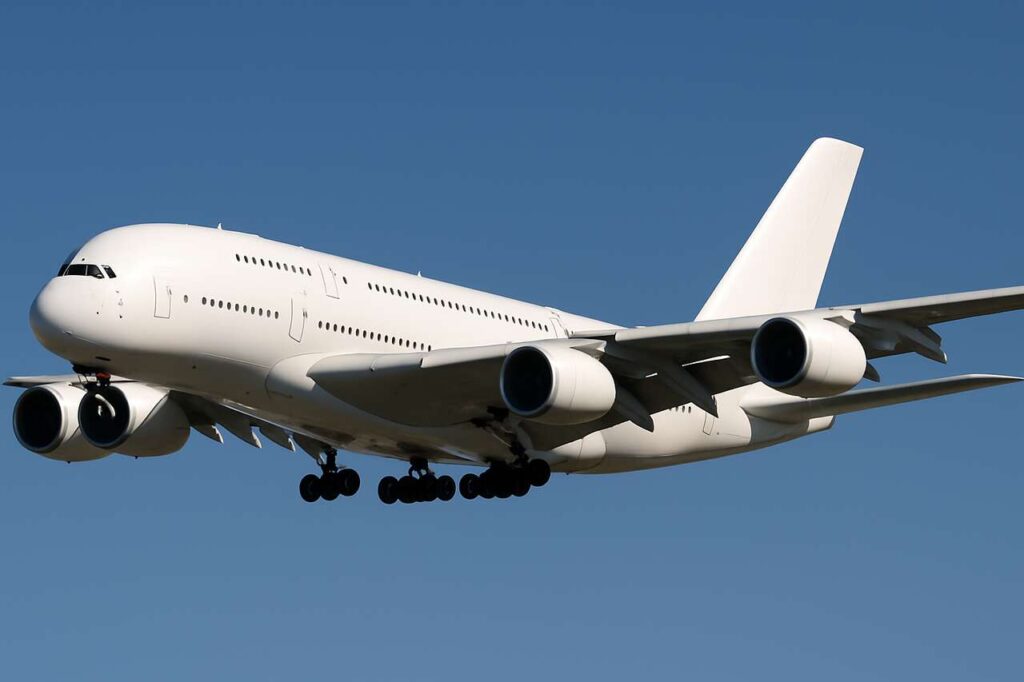
The Airbus A380, the world’s largest passenger airliner, stands as a remarkable feat of aviation engineering. When Airbus embarked on this ambitious project, the decision to equip the aircraft with four engines rather than two sparked considerable debate within the industry. This choice was not merely a matter of preference but stemmed from a complex interplay of technical requirements, safety considerations, and strategic market positioning. Understanding why Airbus opted for a four-engine configuration reveals much about the challenges of designing an aircraft of unprecedented scale and the company’s vision for the future of long-haul aviation.
Historical context of the A380
The genesis of the superjumbo concept
During the late 1990s, Airbus identified a significant gap in the aviation market for an aircraft capable of transporting substantially more passengers than existing models. The company envisioned a future where major international hubs would experience increasing congestion, necessitating larger aircraft to maximise passenger throughput on key routes. This strategic vision led to the development of what would become the A380, designed to accommodate between 525 and 853 passengers depending on configuration.
The project represented Airbus’s bold challenge to Boeing’s decades-long dominance in the large aircraft segment, particularly the iconic 747. The European manufacturer sought not simply to match Boeing’s offering but to create something entirely new that would redefine expectations for capacity, comfort, and operational efficiency on long-haul routes.
Competitive landscape and market positioning
The aviation landscape at the turn of the millennium presented both opportunities and challenges for Airbus:
- Boeing’s 747 had enjoyed virtual monopoly status in the very large aircraft category for over three decades
- Growing air travel demand, particularly in Asia-Pacific markets, suggested strong future requirements for high-capacity aircraft
- Airport slot constraints at major hubs made larger aircraft economically attractive for airlines
- Technological advances in materials, avionics, and engine design made a new generation of superjumbo feasible
These market conditions convinced Airbus that the time was right to introduce a revolutionary aircraft that would establish European leadership in this prestigious segment. The four-engine configuration would prove central to realising this ambition.
Having established the strategic rationale behind the A380 programme, it becomes essential to examine the specific engineering challenges that influenced the decision to employ four engines rather than alternative configurations.
The challenges of four-engine design
Engineering complexity and weight considerations
Designing an aircraft with a maximum takeoff weight of approximately 575 tonnes presented unprecedented engineering challenges. This massive weight—significantly exceeding the 351 tonnes of the Boeing 777-300ER—required careful consideration of every design element. The four-engine configuration added considerable complexity to the aircraft’s structure, systems, and maintenance requirements.
Key technical challenges included:
- Developing wing structures capable of supporting four massive engines whilst maintaining aerodynamic efficiency
- Creating fuel systems that could reliably distribute fuel across four engines during all flight phases
- Designing hydraulic and electrical systems with sufficient redundancy for four-engine operation
- Managing the increased maintenance burden associated with twice as many engines as twin-engine alternatives
Thrust requirements and engine technology limitations
The fundamental driver behind the four-engine decision was thrust requirement. To safely operate an aircraft weighing 575 tonnes, particularly during critical takeoff and climb phases, approximately 300,000 pounds of combined thrust was necessary. At the time of the A380’s design, no twin-engine configuration could reliably deliver this level of power.
| Aircraft model | Number of engines | Total thrust (approximate) | Maximum takeoff weight |
|---|---|---|---|
| Airbus A380 | 4 | 300,000 lbs | 575 tonnes |
| Boeing 777-300ER | 2 | 220,000 lbs | 351 tonnes |
| Boeing 747-400 | 4 | 252,000 lbs | 412 tonnes |
Engine manufacturers developed specialised powerplants specifically for the A380, including the Rolls-Royce Trent 900 and Engine Alliance GP7200. These engines represented the cutting edge of turbofan technology, each capable of producing approximately 70,000 to 80,000 pounds of thrust.
Beyond the pure engineering necessities, the four-engine configuration offered specific operational advantages that Airbus believed would appeal to airlines operating long-haul routes across vast oceanic expanses.
The operational benefits of four engines
Enhanced redundancy and safety margins
One of the most compelling arguments for the four-engine configuration centred on safety and redundancy. In the unlikely event of an engine failure, an A380 loses only 25 per cent of its total thrust, allowing the aircraft to maintain adequate performance with the three remaining engines. This contrasts sharply with twin-engine aircraft, where a single engine failure represents a 50 per cent reduction in available power.
This redundancy proved particularly valuable for:
- Long-haul flights over remote oceanic regions with limited diversion airports
- Operations in challenging weather conditions where additional power reserves provide safety margins
- Takeoff and landing at high-altitude or hot-weather airports where engine performance is naturally reduced
- Passenger and crew confidence, particularly on ultra-long-haul routes
Performance characteristics and operational flexibility
The four-engine configuration provided operational advantages beyond simple redundancy. The distribution of thrust across four engines allowed for more nuanced power management during different flight phases. Pilots could modulate engine settings more precisely, potentially achieving better fuel efficiency during cruise whilst maintaining robust performance during takeoff and climb.
Additionally, the four-engine design offered airlines flexibility in route planning. The aircraft’s ability to maintain safe flight with one engine inoperative meant fewer restrictions under Extended-range Twin-engine Operational Performance Standards (ETOPS) regulations, which govern how far twin-engine aircraft can fly from suitable diversion airports.
Passenger experience and market perception
From a marketing perspective, the four-engine configuration contributed to the A380’s image as a premium, ultra-safe aircraft. Many passengers, particularly on long-haul flights, perceived four-engine aircraft as inherently safer than their twin-engine counterparts, despite statistical evidence showing no significant safety differences between properly maintained modern aircraft regardless of engine count.
The quiet cabin environment, partly achieved through advanced engine mounting and noise suppression technology across four engines rather than two more powerful ones, became a signature feature that airlines emphasised when promoting A380 services.
These operational benefits must be weighed against the realities of modern twin-engine aircraft, which have evolved dramatically since the A380’s initial design phase and now offer compelling alternatives for airlines.
Comparison with twin-engines
Fuel efficiency and operating economics
The most significant disadvantage of the four-engine configuration emerges when examining fuel consumption and operating costs. Modern twin-engine wide-body aircraft such as the Boeing 787 Dreamliner and Airbus A350 achieve substantially better fuel efficiency per passenger than the A380, primarily because they carry fewer engines and associated systems.
| Cost factor | Four-engine A380 | Twin-engine alternatives |
|---|---|---|
| Fuel burn per seat | Higher | 15-25% lower |
| Maintenance complexity | Four engines to service | Two engines to service |
| Parts inventory | Larger requirement | Reduced requirement |
| Engine overhaul costs | Double that of twins | Baseline |
Airlines operating the A380 faced substantially higher maintenance expenses due to the need to service, inspect, and eventually overhaul four engines rather than two. This economic reality became increasingly problematic as fuel prices fluctuated and airlines sought to optimise their fleet economics.
Technological advances in twin-engine capabilities
Since the A380’s design was finalised, engine technology has advanced considerably. Modern turbofan engines produce significantly more thrust whilst consuming less fuel than their predecessors. These developments have enabled twin-engine aircraft to achieve performance levels that would have required four engines during the A380’s development phase.
Key technological improvements include:
- Advanced materials reducing engine weight whilst increasing durability
- Improved aerodynamics in fan blade and compressor design
- More efficient combustion chambers and turbine cooling systems
- Sophisticated engine control systems optimising performance across flight regimes
The Boeing 777X, for instance, utilises just two GE9X engines—each producing over 100,000 pounds of thrust—to power an aircraft with a maximum takeoff weight approaching 352 tonnes. This demonstrates how twin-engine technology has evolved to handle weights that once necessitated four engines.
Regulatory environment and ETOPS certification
The regulatory landscape has shifted considerably in favour of twin-engine aircraft. Extended-range Twin-engine Operational Performance Standards have been progressively relaxed as twin-engine reliability has improved. Modern twin-engine aircraft routinely receive ETOPS-330 or even ETOPS-370 certification, allowing them to fly routes up to 370 minutes from the nearest suitable diversion airport.
This regulatory evolution has eliminated one of the traditional advantages of four-engine aircraft, as twins can now operate virtually any commercial route worldwide with minimal restrictions. The operational flexibility once exclusive to four-engine designs is now available to more economical twin-engine alternatives.
The competitive pressures from increasingly capable twin-engine aircraft have profoundly influenced how airlines and the broader aviation market have responded to the A380 and its four-engine configuration.
Impact on the aviation market
Sales performance and airline adoption
Despite its technical achievements and passenger appeal, the A380 struggled to achieve commercial success. By 2021, Airbus had sold only 251 units—a fraction of the initial projections—compared to over 800 Boeing 777s and hundreds of Boeing 787s and Airbus A350s. This disparity reflects fundamental market realities that Airbus had not fully anticipated when committing to the four-engine superjumbo concept.
Several factors contributed to limited adoption:
- Airlines increasingly favoured point-to-point routes over hub-and-spoke models, reducing demand for very high capacity aircraft
- The four-engine configuration’s higher operating costs made the A380 economically viable only on the highest-density routes
- Airport infrastructure limitations required costly modifications to accommodate the A380’s size
- Fleet flexibility concerns made airlines hesitant to commit to such a specialised aircraft
Shifting airline strategies and route networks
The aviation industry experienced significant strategic shifts during the A380’s operational life. Airlines discovered that operating more frequent flights with smaller twin-engine aircraft often generated better revenue than fewer flights with the massive A380. This approach provided passengers with more convenient departure times whilst reducing the risk of flying with empty seats.
The four-engine configuration became a liability in this evolving market environment. Airlines could deploy two A350s or 787s on a route with greater scheduling flexibility and lower risk than operating a single A380, even if the superjumbo theoretically offered lower costs per seat when fully loaded.
Environmental considerations and public perception
As environmental awareness grew throughout the aviation industry, the A380’s four engines became a public relations challenge. Despite Airbus’s efforts to emphasise the aircraft’s relatively low emissions per passenger when fully loaded, the image of four large engines proved difficult to reconcile with growing demands for environmental responsibility in aviation.
Twin-engine competitors could more easily market their environmental credentials, pointing to lower absolute fuel consumption and emissions even when carrying fewer passengers. This perception gap influenced airline purchasing decisions as carriers sought to enhance their environmental credentials with stakeholders and customers.
These market realities raise important questions about the A380’s long-term viability and whether four-engine commercial aircraft have a sustainable future as aviation technology continues to evolve.
The future of the A380 in the face of technological changes
Production cessation and fleet prospects
Airbus announced the end of A380 production in 2019, with final deliveries completed in 2021. This decision acknowledged the fundamental market reality that demand for four-engine superjumbos had not materialised as anticipated. The aircraft that was meant to define the future of long-haul aviation instead became a niche product operated by a limited number of carriers on specific high-demand routes.
Existing A380 operators face challenging decisions regarding their fleets:
- Whether to invest in cabin refurbishments and major maintenance for aircraft with potentially limited operational lifespans
- How to integrate A380s into post-pandemic route networks with changed demand patterns
- Whether the secondary market for used A380s will develop or if early retirements become economically preferable
- What role, if any, the A380 will play as airlines rebuild their networks and fleets
Lessons for future aircraft development
The A380 experience provides valuable insights for future large aircraft development. The primacy of operating economics over capacity and the importance of fleet flexibility have become undeniable. Future designs will likely prioritise fuel efficiency and operational versatility over maximum size, making four-engine configurations increasingly unlikely for commercial passenger aircraft.
Technological developments continue to favour twin-engine designs. Advances in materials science, aerodynamics, and propulsion systems enable ever-larger and more capable twin-engine aircraft. The next generation of wide-body aircraft will almost certainly feature just two engines, regardless of size, as the economic and operational advantages have become overwhelming.
Potential niche applications and legacy
Despite its commercial challenges, the A380 may find continued relevance in specific applications. Some airlines operating from slot-constrained airports on ultra-high-demand routes may continue flying A380s for years to come, particularly if fuel prices remain manageable and passenger loads justify the capacity.
The aircraft’s legacy extends beyond its operational record. Engineering innovations developed for the A380—in materials, systems integration, cabin design, and manufacturing processes—have influenced subsequent aircraft development. The lessons learned, both positive and negative, will shape aviation industry decision-making for decades.
The A380 programme demonstrates that even brilliant engineering and ambitious vision must align with market realities and economic fundamentals. The decision to equip the aircraft with four engines was defensible given the technology and market understanding available during its development phase. However, rapid advances in twin-engine capabilities, shifting airline strategies, and evolving passenger demand patterns revealed the limitations of the four-engine superjumbo concept. Whilst the A380 achieved its technical objectives and delivered a remarkable passenger experience, its commercial performance fell short of expectations. The aircraft serves as a reminder that in aviation, as in many industries, bigger is not always better, and engineering excellence alone cannot guarantee market success. The future of long-haul aviation belongs to more flexible, economical twin-engine aircraft, leaving the magnificent A380 as a bold but ultimately limited chapter in commercial aviation history.