



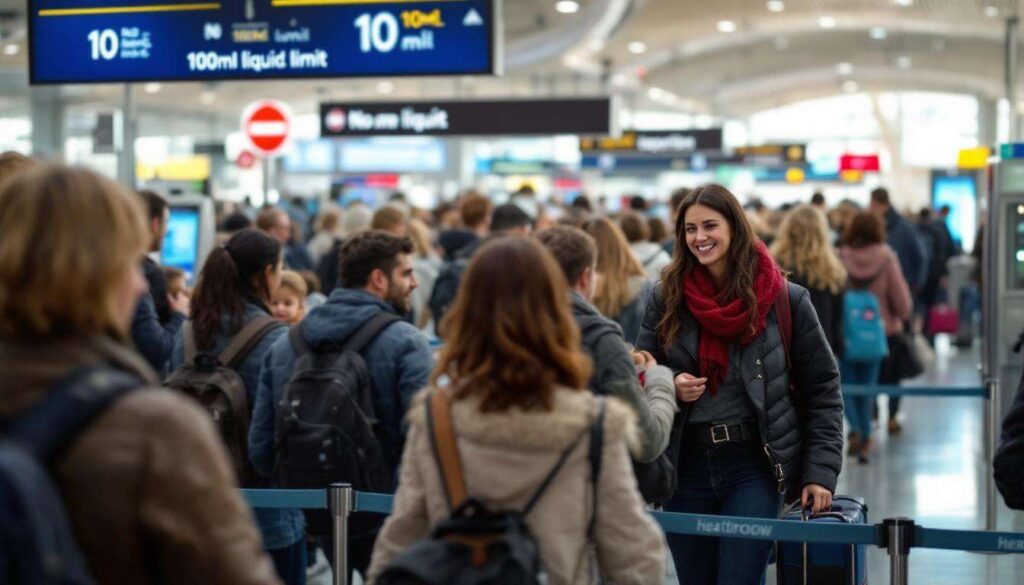
Heathrow Airport has officially ended its longstanding 100ml liquid restriction, marking a significant shift in aviation security protocols that have defined air travel for two decades. The change represents one of the most substantial updates to airport screening procedures since the original restrictions were implemented, promising to streamline the passenger experience whilst maintaining robust security standards. Travellers passing through one of the world’s busiest airports can now pack liquids, gels and aerosols without the tedious task of decanting products into tiny containers or relegating favourite toiletries to checked baggage.
Background and history of the 100ml rule
The 100ml liquid restriction emerged in the aftermath of a foiled terrorist plot that targeted transatlantic flights. In August 2006, British authorities uncovered a conspiracy to detonate liquid explosives aboard multiple aircraft travelling from the UK to North America. The discovery prompted immediate action from aviation security agencies worldwide, leading to sweeping changes in how passengers could transport liquids through airport security checkpoints.
Implementation across global airports
Following the threat, airports rapidly introduced stringent measures that required passengers to:
- Limit individual liquid containers to a maximum of 100ml
- Place all liquids in a single, transparent, resealable plastic bag
- Present the bag separately during security screening
- Remove the bag from hand luggage before X-ray examination
The regulation became a universal standard across European Union airports and was adopted by numerous countries globally. For nearly twenty years, the familiar sight of passengers frantically transferring products into miniature bottles became an integral part of the pre-flight routine. The restriction applied to all liquids, gels, pastes and aerosols, from water bottles and shampoo to yoghurt and cosmetics, fundamentally altering how travellers prepared for their journeys.
These measures have shaped passenger behaviour and influenced the travel retail industry, spawning an entire market for travel-sized products. Understanding this historical context helps explain why the recent policy change represents such a momentous development for frequent flyers and occasional travellers alike.
Reasons for scrapping the rule
The decision to eliminate the 100ml restriction stems from technological advancements in airport security screening rather than a reduction in threat levels. Heathrow has invested substantially in next-generation computed tomography (CT) scanners that provide security personnel with unprecedented visibility into carry-on baggage contents.
Advanced scanning technology
The new CT scanners operate similarly to medical imaging equipment, creating detailed three-dimensional images of luggage contents. Security officers can rotate and examine items from multiple angles on their screens, identifying potential threats with greater accuracy than traditional two-dimensional X-ray machines. This technology can distinguish between harmless liquids and dangerous substances regardless of volume, rendering the arbitrary 100ml limit obsolete.
| Feature | Traditional scanners | CT scanners |
|---|---|---|
| Image type | 2D X-ray | 3D computed tomography |
| Liquid detection | Limited capability | Advanced substance analysis |
| Bag removal required | Yes | No |
| Electronics removal | Yes | No |
Alignment with government initiatives
The UK government mandated that all major airports install this advanced screening equipment by June 2024, part of a broader strategy to modernise aviation security infrastructure. Heathrow’s implementation positions the airport at the forefront of this transformation, demonstrating commitment to both enhanced security and improved passenger experience. The move reflects confidence that technology can now achieve what restrictive policies once attempted, creating a more efficient security process without compromising safety.
This technological evolution naturally leads to questions about what the new security procedures actually entail for passengers navigating Heathrow’s terminals.
New security measures at Heathrow
Whilst the 100ml restriction has been lifted, Heathrow has introduced refined procedures that leverage the capabilities of the new scanning technology. Passengers will notice immediate differences when approaching security checkpoints, though the fundamental process of screening remains intact.
Updated checkpoint procedures
Under the new system, travellers no longer need to remove liquids from their hand luggage or place them in separate plastic bags. Laptops, tablets and other electronic devices can also remain inside bags during screening, significantly reducing the time spent unpacking and repacking at security lanes. The CT scanners examine entire bags comprehensively, eliminating the need for item segregation that previously slowed the screening process.
Security personnel retain the authority to conduct additional checks if the scanners flag any items for closer inspection. Passengers should expect that random secondary screenings will continue as part of standard security protocols, though these should occur less frequently given the enhanced imaging capabilities.
Terminal-specific implementation
The rollout of new scanners has occurred progressively across Heathrow’s terminals. Terminal 3 was among the first to receive the upgraded equipment, followed by installations in Terminals 2, 4 and 5. Passengers should verify which terminal their flight departs from and check Heathrow’s official communications for confirmation that their specific security lane has been equipped with CT technology, as some variation may exist during the transition period.
These procedural changes naturally raise questions about how they will affect the day-to-day experience of millions of passengers who pass through Heathrow annually.
Impact for travellers
The elimination of liquid restrictions delivers tangible benefits for passengers whilst introducing some considerations that travellers should keep in mind when planning their journeys through Heathrow.
Packing convenience
Passengers can now pack full-sized toiletries, beverages and other liquids in their carry-on luggage without concern for volume limits. This change proves particularly valuable for:
- Business travellers on short trips who prefer travelling with hand luggage only
- Passengers with specific medical or dietary requirements necessitating larger liquid quantities
- Families travelling with young children who require formula, expressed milk or other essential liquids
- Travellers carrying valuable skincare products or cosmetics they prefer not to check
Time savings at security
The streamlined process should reduce time spent at security checkpoints, as passengers no longer need to extract liquids and electronics from bags. Early observations suggest that processing times have decreased by approximately 20-30% at lanes equipped with CT scanners, though actual times vary depending on passenger volume and other factors.
Considerations and limitations
Despite the relaxed restrictions at Heathrow, travellers must remember that destination airports and connecting flights may still enforce traditional liquid limits. Passengers flying onwards from Heathrow to airports without CT scanner technology will need to ensure their liquids comply with regulations at subsequent security checkpoints. Additionally, airline-specific carry-on weight and size restrictions remain unchanged, so packing additional liquids may impact overall baggage weight.
Understanding these implications helps travellers maximise the benefits whilst avoiding potential complications, which leads naturally to practical strategies for navigating the new system efficiently.
Tips for smooth passage
Whilst the new regulations simplify security screening, passengers can take proactive steps to ensure the smoothest possible experience when travelling through Heathrow.
Pre-travel preparation
Before arriving at the airport, travellers should verify their departure terminal and confirm that CT scanners are operational in their security lanes. Checking Heathrow’s website or mobile application provides current information about security wait times and any temporary variations in procedures. Passengers should also research requirements at their destination airport to avoid packing liquids that may be confiscated at connecting security checkpoints.
At the security checkpoint
To expedite screening, passengers should:
- Organise hand luggage to facilitate quick visual inspection if required
- Keep travel documents readily accessible
- Wear easily removable footwear if concerned about secondary screening
- Remove coats and jackets before approaching the scanner
- Follow instructions from security personnel promptly and courteously
Maintaining awareness of items that consistently trigger additional screening helps travellers pack strategically. Dense foods, wrapped gifts and tightly packed bags may still require manual inspection regardless of scanner technology.
Connecting flights and international travel
For passengers with connections, particularly those travelling to destinations outside the UK, packing a separate, compliant liquids bag that can be easily accessed if needed provides flexibility. This precaution proves especially valuable when transit airports have not yet implemented advanced scanning technology or maintain stricter security protocols.
These practical considerations naturally prompt questions about how different stakeholders have responded to this significant policy shift.
Reactions from travellers and experts
The removal of liquid restrictions has generated varied responses from passengers, aviation security specialists and industry observers, reflecting both enthusiasm for progress and pragmatic concerns about implementation.
Passenger perspectives
Frequent flyers have largely welcomed the change, with many expressing relief at no longer needing to navigate the complexities of liquid restrictions. Business travellers particularly appreciate the ability to carry full-sized products and beverages, whilst families value the flexibility for children’s needs. Some passengers have expressed initial confusion about which rules apply at different airports, highlighting the need for clear communication during the transition period.
Security expert analysis
Aviation security professionals generally support the technological upgrade, noting that CT scanners provide superior threat detection compared to previous systems. Experts emphasise that security has been enhanced rather than relaxed, as the new equipment identifies potential dangers more effectively than older technology combined with volume restrictions. Some specialists caution that public education remains essential to prevent confusion as different airports progress through implementation at varying rates.
Industry implications
The travel retail sector faces adjustment as demand patterns shift away from travel-sized products. Airport retailers may need to reconsider product offerings and merchandising strategies as passengers gain freedom to bring full-sized items from home. Conversely, duty-free shops may benefit from increased passenger satisfaction and time savings at security, potentially leading to more leisurely browsing before flights.
Heathrow’s decision to eliminate the 100ml liquid restriction represents a watershed moment in aviation security, balancing enhanced safety protocols with improved passenger convenience. The implementation of advanced CT scanning technology enables more effective threat detection whilst streamlining the screening process, delivering benefits that extend beyond mere convenience to encompass genuine security improvements. As travellers adapt to the new procedures, clear communication and awareness of varying international standards remain essential for smooth journeys. The change sets a precedent that other major airports worldwide are likely to follow, potentially transforming the global air travel experience in the coming years.