



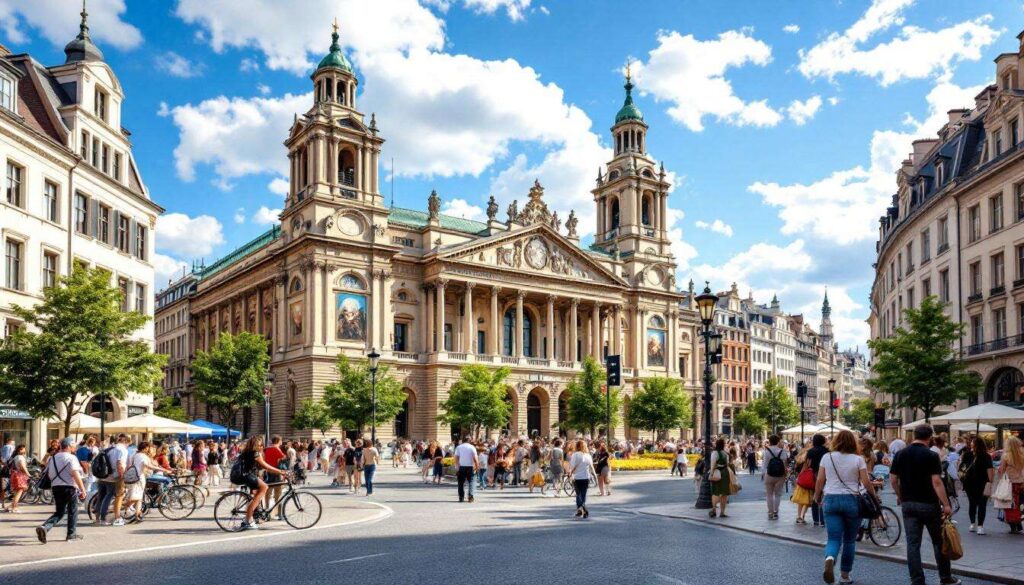
Art enthusiasts and culture seekers have long understood that certain cities stand as beacons of creative expression, housing collections that span millennia and showcase humanity’s most profound artistic achievements. These destinations offer more than mere exhibitions; they provide immersive experiences where history, innovation, and aesthetic beauty converge. From Renaissance masterpieces to cutting-edge installations, the world’s premier cultural capitals continue to redefine what it means to engage with art.
Discovering Paris: the cradle of art and culture
The Louvre and its unrivalled collections
The Musée du Louvre remains the world’s most visited museum, attracting millions who seek encounters with iconic works such as the Mona Lisa and the Venus de Milo. This former royal palace houses approximately 38,000 objects spanning from antiquity to the 19th century, organised across eight curatorial departments. Visitors can explore Egyptian sarcophagi, Mesopotamian sculptures, and French Romantic paintings within a single visit.
Beyond the Louvre: Parisian museum diversity
Paris offers an extraordinary range of specialist institutions that cater to varied artistic tastes:
- The Musée d’Orsay showcases Impressionist and Post-Impressionist masterworks by Monet, Renoir, and Van Gogh
- The Centre Pompidou presents modern and contemporary art in its architecturally striking building
- The Musée Rodin displays the sculptor’s works within elegant gardens
- The Musée de l’Orangerie features Monet’s monumental Water Lilies series
These institutions collectively demonstrate why Paris maintains its reputation as an artistic powerhouse, offering comprehensive coverage of Western art history whilst embracing contemporary innovation.
Rome and its ancient treasures
Vatican Museums: spiritual and artistic grandeur
The Vatican Museums constitute one of the world’s most significant collections, featuring works commissioned by successive popes over five centuries. The Sistine Chapel, with Michelangelo’s ceiling frescoes and Last Judgement, represents the pinnacle of Renaissance achievement. The Raphael Rooms display the artist’s mastery of perspective and narrative composition, whilst the Gallery of Maps offers cartographic marvels from the 16th century.
Classical antiquity in Roman museums
Rome’s archaeological museums provide unparalleled access to ancient civilisations. The Capitoline Museums, established in 1471, house bronze sculptures including the iconic she-wolf of Rome. The Borghese Gallery combines classical sculptures with Baroque paintings by Caravaggio and Bernini’s dynamic marble works. These institutions demonstrate how Rome preserves its multi-layered history, from Republican times through the Imperial period.
Understanding Rome’s artistic legacy naturally leads to exploring how other European capitals have developed their own distinctive cultural identities.
London: between tradition and artistic modernity
The British Museum’s global collections
The British Museum offers free admission to collections spanning two million years of human history. Its holdings include the Rosetta Stone, Parthenon sculptures, and Egyptian mummies, attracting over six million annual visitors. The museum’s commitment to accessibility and education has established it as a model for public institutions worldwide.
Contemporary art institutions
London’s contemporary scene thrives through several key venues:
- The Tate Modern occupies a converted power station, displaying international modern art from 1900 onwards
- The National Gallery houses Western European paintings from the 13th to 19th centuries
- The Victoria and Albert Museum focuses on decorative arts and design
- The Saatchi Gallery champions emerging contemporary artists
This combination of historical depth and contemporary vitality positions London as a city where artistic tradition informs ongoing innovation.
New York: the capital of contemporary art
The Metropolitan Museum of Art’s encyclopaedic scope
The Metropolitan Museum of Art ranks amongst the world’s largest museums, with permanent collections exceeding two million works. Its departments cover everything from ancient Near Eastern art to contemporary photography, providing comprehensive coverage across cultures and periods. The Met’s rooftop garden offers seasonal installations with spectacular city views.
Modern and contemporary powerhouses
New York’s contemporary art scene demonstrates remarkable concentration and quality. The Museum of Modern Art (MoMA) houses seminal works by Picasso, Warhol, and Pollock, whilst continuously acquiring cutting-edge contemporary pieces. The Guggenheim Museum, designed by Frank Lloyd Wright, presents modern art within an architectural masterpiece. The Whitney Museum focuses exclusively on American art, offering fresh perspectives on national creative output.
These institutions collectively establish New York as the epicentre of contemporary artistic discourse, a position that resonates with other cities developing their own modern art scenes.
Berlin, the emerging scene of creators
Museum Island’s classical collections
Berlin’s Museum Island, a UNESCO World Heritage site, comprises five museums housing archaeological treasures and classical art. The Pergamon Museum displays monumental reconstructions including the Ishtar Gate of Babylon. The Neues Museum presents the famous bust of Nefertiti alongside Egyptian and prehistoric collections.
Contemporary galleries and alternative spaces
Berlin has emerged as a magnet for contemporary artists due to affordable studio space and a vibrant cultural atmosphere. The Hamburger Bahnhof occupies a former railway station, displaying contemporary art from the Flick Collection. Numerous independent galleries in neighbourhoods like Kreuzberg and Mitte showcase experimental works by international artists, creating an ecosystem where established institutions coexist with grassroots creativity.
Tokyo: a dive into avant-garde art
Traditional Japanese aesthetics
The Tokyo National Museum preserves Japan’s artistic heritage through comprehensive collections of samurai armour, ukiyo-e prints, and Buddhist sculptures. The Nezu Museum displays traditional Japanese and East Asian art within a serene garden setting, offering contemplative engagement with historical works.
Cutting-edge contemporary venues
Tokyo’s contemporary art scene reflects Japan’s technological innovation and aesthetic sensibility. The Mori Art Museum, located on the 53rd floor of Roppongi Hills, presents international contemporary exhibitions with panoramic city views. The teamLab Borderless digital art museum offers immersive installations that blur boundaries between artwork and viewer, representing a distinctly 21st-century approach to artistic experience.
These six cities represent the pinnacle of artistic destinations, each offering unique perspectives on human creativity. Paris provides comprehensive coverage of Western art history, whilst Rome preserves classical antiquity alongside Renaissance masterpieces. London balances tradition with contemporary innovation, and New York dominates the contemporary art market. Berlin’s emerging scene attracts creators seeking experimental freedom, whilst Tokyo demonstrates how technology can transform artistic engagement. Together, they form an essential itinerary for anyone seeking profound cultural enrichment through museum exploration.