



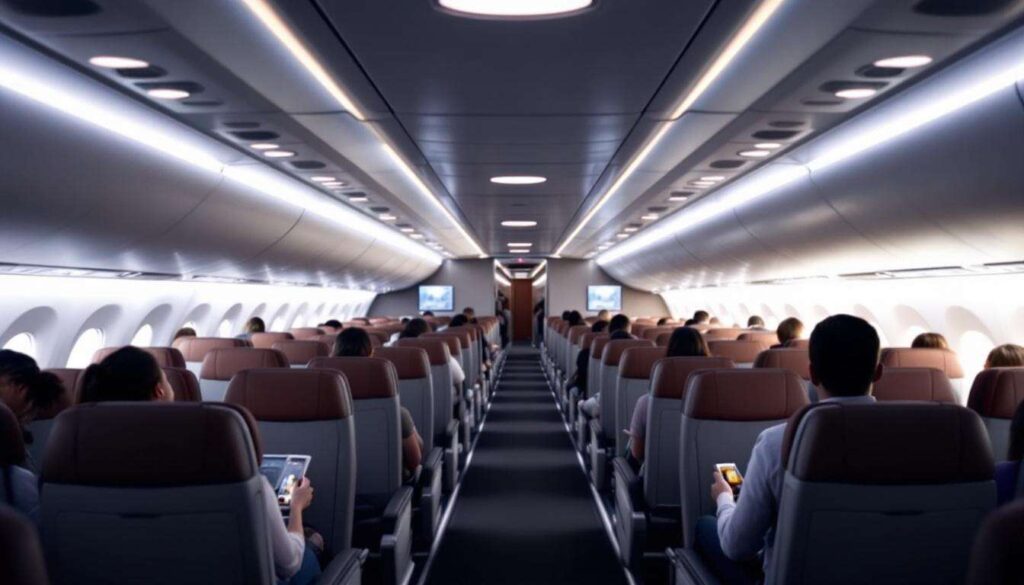
Long-haul passengers have become increasingly discerning about aircraft comfort, and two models frequently dominate discussions: the Airbus A350 and the Boeing 787 Dreamliner. Both represent significant technological advances in commercial aviation, yet their approaches to passenger comfort differ in subtle but meaningful ways. Airlines worldwide have invested heavily in these aircraft, each promising enhanced experiences through innovative design and engineering. The question of which offers superior comfort has sparked considerable debate amongst frequent flyers and industry observers alike, with factors ranging from seat width to air quality playing crucial roles in the overall journey experience.
Cabin comfort: a350 vs 787
Seat configuration and width
The most immediately noticeable difference between these aircraft concerns seat arrangement in economy class. Many airlines configure the A350 with a nine-abreast layout in economy, whilst some operators choose a nine-abreast configuration for the 787 as well. However, the A350’s wider fuselage allows for approximately one inch of additional seat width when using the same configuration. This seemingly modest difference becomes significant during flights lasting ten hours or more, where even marginal improvements in personal space contribute substantially to passenger wellbeing.
- A350 fuselage width: 5.96 metres
- 787 fuselage width: 5.74 metres
- Typical A350 economy seat width: 18 inches
- Typical 787 economy seat width: 17-17.5 inches
Window design and natural light
Both aircraft feature larger windows than previous generation aircraft, yet their implementations differ. The 787 introduced electronically dimmable windows, eliminating traditional pull-down shades and allowing passengers to adjust transparency levels. The A350, whilst featuring larger windows than older aircraft, retains conventional window shades. The 787’s windows measure approximately 30% larger than those on traditional aircraft, whilst the A350’s windows are also generously proportioned, though slightly smaller than the 787’s.
These fundamental design choices set the stage for examining how technology shapes the passenger environment beyond basic dimensions.
Interior design and technological innovation
Lighting systems and ambience
Both manufacturers have invested heavily in LED mood lighting systems that simulate natural light cycles and create varied cabin atmospheres. The 787’s lighting can display approximately 16.7 million colour combinations, allowing airlines to programme sequences that reduce jet lag by mimicking sunrise and sunset. The A350 offers similar capabilities with its lighting system, enabling airlines to customise the cabin environment throughout different flight phases.
| Feature | Airbus A350 | Boeing 787 |
|---|---|---|
| LED mood lighting | Yes | Yes |
| Overhead bin space | Enhanced | Enhanced |
| Window dimming | Manual shades | Electronic |
| Cabin altitude | 6,000 feet | 6,000 feet |
Materials and aesthetic choices
The A350 utilises composite materials extensively, comprising approximately 53% of its airframe structure. This allows for smoother cabin surfaces and more organic design elements. The 787 similarly employs composite materials for roughly 50% of its structure, enabling curved cabin walls that create a greater sense of spaciousness. Both aircraft benefit from reduced maintenance requirements and enhanced durability through these material choices.
Beyond visual appeal, the physical environment within these cabins extends to atmospheric conditions that directly affect passenger wellbeing.
In-flight silence and air quality
Noise reduction technology
Engine placement and acoustic insulation play crucial roles in cabin quietness. The A350’s Rolls-Royce Trent XWB engines and the 787’s General Electric GEnx or Rolls-Royce Trent 1000 engines are significantly quieter than previous generation powerplants. Sound measurements indicate that both aircraft achieve comparable noise levels, typically ranging between 70-75 decibels during cruise, substantially lower than older wide-body aircraft.
- Advanced acoustic insulation materials
- Optimised engine nacelle designs
- Improved airflow management
- Vibration dampening systems
Humidity and pressurisation
Both aircraft maintain cabin altitude at approximately 6,000 feet, compared to 8,000 feet in traditional aluminium aircraft. This lower cabin altitude reduces passenger fatigue and dehydration. The composite construction allows for higher humidity levels without corrosion concerns, with both aircraft capable of maintaining 15-16% relative humidity compared to 4-6% in older models. These improvements contribute measurably to reduced jet lag symptoms and enhanced arrival comfort.
Physical dimensions complement these atmospheric improvements in determining overall passenger comfort levels.
Differences in seat space
Pitch and legroom variations
Seat pitch, the distance between identical points on consecutive rows, varies more by airline policy than aircraft design. However, the A350’s slightly wider cabin allows some carriers to offer more generous configurations without sacrificing capacity. Premium economy sections on both aircraft typically feature 38-40 inches of pitch, whilst economy ranges from 30-34 inches depending on the operator’s business model.
Business and first class configurations
In premium cabins, both aircraft offer exceptional flexibility for airlines. The A350’s width accommodates various business class layouts, including popular 1-2-1 configurations that provide direct aisle access for all passengers. The 787, whilst slightly narrower, still permits comfortable premium configurations, though some airlines opt for staggered layouts to maximise privacy within dimensional constraints.
| Class | Typical A350 pitch | Typical 787 pitch |
|---|---|---|
| Economy | 31-34 inches | 30-33 inches |
| Premium economy | 38-40 inches | 38-40 inches |
| Business | 60-80 inches | 60-78 inches |
These measurable differences become tangible through the experiences of those who regularly travel aboard these aircraft.
Passenger experience: testimonials
Frequent flyer perspectives
Regular travellers often note that airline-specific factors influence comfort as significantly as aircraft type. A premium carrier’s 787 with generous seat pitch and attentive service frequently receives higher satisfaction ratings than a budget operator’s A350 with dense seating. Passengers consistently praise both aircraft for quietness and air quality improvements over previous generation models.
Route-specific considerations
The choice between these aircraft often depends on specific route requirements. The A350-1000, the largest variant, excels on ultra-long-haul routes where its additional capacity and range prove advantageous. The 787-9 competes effectively on similar routes, whilst the smaller 787-8 serves thinner long-haul markets efficiently. Passenger preferences sometimes align with route length, with the A350’s marginally wider seats gaining appreciation on flights exceeding twelve hours.
Environmental considerations increasingly influence both passenger choices and airline procurement decisions.
Energy efficiency and environmental impact
Fuel consumption comparisons
Both aircraft achieve remarkable fuel efficiency compared to predecessors, consuming approximately 20-25% less fuel per seat. The A350-900 and 787-9, being most directly comparable, show similar performance metrics. The A350 demonstrates slight advantages on certain ultra-long-haul routes, whilst the 787 excels on medium-length international services.
- Advanced aerodynamic designs
- Lightweight composite construction
- Next-generation engine technology
- Optimised wing designs
Carbon footprint and sustainability
Environmental consciousness increasingly influences passenger aircraft selection. Both models produce significantly lower emissions per passenger-kilometre than aircraft they replace. The composite materials used extensively in both designs are recyclable, addressing end-of-life environmental concerns. Airlines operating these aircraft benefit from reduced noise footprints, enabling access to noise-sensitive airports and expanded operating windows.
The debate over whether the Airbus A350 offers superior comfort to the Boeing 787 ultimately depends on multiple variables beyond aircraft design alone. The A350’s wider cabin does provide tangible advantages in economy class seat width, whilst both aircraft excel in noise reduction, air quality, and technological innovation. Passenger experience varies significantly based on airline configuration choices, service standards, and route characteristics. Both aircraft represent substantial improvements over previous generations, offering enhanced comfort through lower cabin altitude, improved humidity, and quieter operation. The choice between them often reflects airline operational requirements rather than clear-cut superiority in passenger comfort, with both delivering exceptional experiences when configured and operated thoughtfully.