


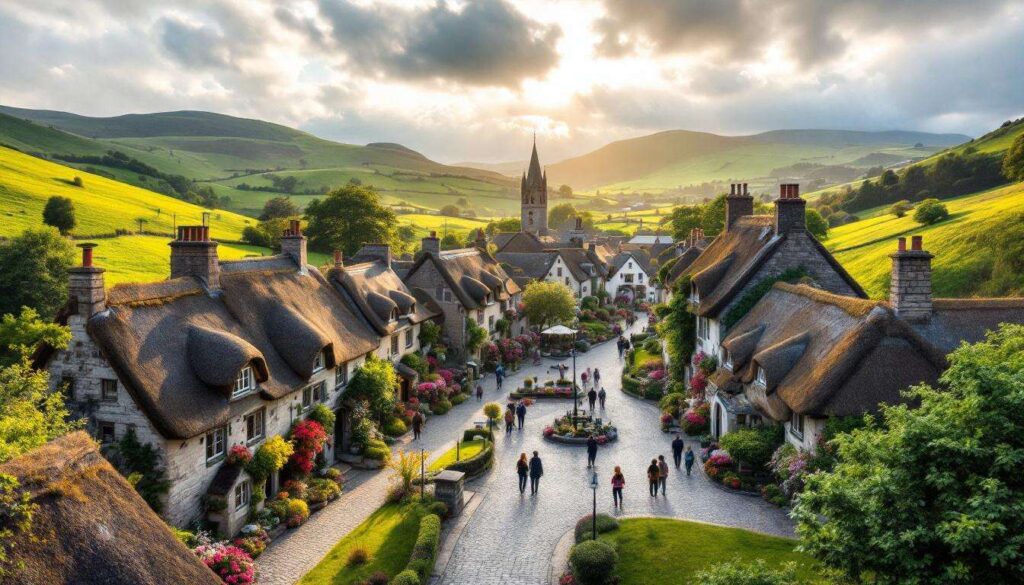
Ireland’s countryside harbours some of Europe’s most picturesque settlements, where cobbled streets wind past colourful shopfronts and centuries-old architecture stands testament to a rich cultural heritage. These small towns offer visitors an escape from modern urban sprawl, presenting instead a glimpse into traditional Irish life where local pubs buzz with conversation, artisan shops showcase regional crafts, and the surrounding landscapes provide breathtaking natural beauty. From coastal harbours to lakeside villages nestled amongst ancient woodlands, each destination possesses its own distinctive character whilst maintaining that quintessentially Irish warmth and hospitality. Whether seeking medieval castles, literary connections, or simply the tranquillity of rural Ireland, these seven enchanting towns deliver experiences that feel lifted straight from the pages of a storybook.
Charming Landscapes of Cong
A village steeped in cinematic history
Situated on the narrow isthmus between Lough Corrib and Lough Mask in County Mayo, Cong achieved international fame as the filming location for John Ford’s classic 1952 film The Quiet Man. The village’s stone cottages, tree-lined paths, and rustic bridges created the perfect backdrop for this romantic drama, and visitors today can still explore many of the original filming locations. The Quiet Man Museum occupies a faithful recreation of the white cottage featured in the film, complete with period furnishings that transport guests back to 1950s rural Ireland.
Natural wonders and ancient monuments
Beyond its Hollywood connections, Cong offers remarkable natural attractions:
- The Cong Canal, an ambitious Victorian engineering project that never successfully held water due to the porous limestone bedrock
- Ashford Castle, a magnificent 800-year-old fortress transformed into a luxury hotel with manicured gardens and woodland trails
- The Monk’s Fishing House, a small stone structure built over the river where medieval monks could catch fish through a trap door
- Numerous limestone caves and underground passages carved by centuries of water erosion
The surrounding forests provide excellent walking opportunities, with well-marked trails leading through ancient woodlands where red squirrels and diverse birdlife thrive. These natural assets combine with the village’s architectural charm to create an atmosphere that genuinely feels removed from contemporary life.
Discovering the Medieval Allure of Kilkenny
Ireland’s medieval capital
Often referred to as the Marble City due to its distinctive black limestone, Kilkenny served as Ireland’s capital during certain periods of the Middle Ages. Kilkenny Castle dominates the townscape, its imposing towers and turrets overlooking the River Nore. Originally built in 1195 by William Marshal, the castle underwent numerous modifications over eight centuries of continuous occupation by the Butler family. Today, visitors can tour the restored Victorian interiors, admire the Long Gallery with its painted ceiling and portraits, and stroll through the extensive parklands.
A thriving cultural scene
Despite its modest size, Kilkenny maintains a vibrant arts community centred around the Kilkenny Design Centre, housed in the castle’s former stables. This showcase for Irish craftsmanship features:
| Craft Type | Notable Features |
|---|---|
| Ceramics | Hand-thrown pottery using traditional techniques |
| Jewellery | Contemporary designs incorporating Celtic motifs |
| Textiles | Woven goods and knitwear from local wool |
| Glasswork | Blown glass pieces and decorative items |
The medieval street pattern remains largely intact, with narrow lanes like Butter Slip and High Street lined with colourful Georgian and Victorian facades. Numerous traditional pubs offer live music sessions most evenings, whilst the annual Kilkenny Arts Festival attracts performers and audiences from across Europe. The coastal towns of southern Ireland offer equally compelling attractions for those continuing their exploration.
The Hidden Wonders of Kinsale
A gourmet destination by the sea
This picturesque harbour town in County Cork has earned recognition as Ireland’s gourmet capital, with an extraordinary concentration of award-winning restaurants serving fresh seafood and innovative cuisine. The steep streets descend towards the natural harbour where fishing boats still bring in daily catches of mackerel, crab, and lobster. Brightly painted houses in shades of pink, yellow, and blue create a Mediterranean atmosphere unusual for Ireland’s Atlantic coast.
Maritime heritage and military history
Kinsale’s strategic position made it significant throughout Irish history. The Battle of Kinsale in 1601 marked a turning point in Irish resistance to English rule, whilst the town’s two star-shaped forts demonstrate 17th-century military architecture. Charles Fort, one of Europe’s best-preserved examples of such fortifications, offers panoramic views across the harbour entrance. The town also holds a connection to the Lusitania disaster, as the torpedoed liner sank off the nearby coast in 1915, with many victims brought to Kinsale.
Water activities flourish here, from sailing and sea kayaking to deep-sea fishing charters. The Scilly Walk, a coastal path to Charles Fort, provides stunning vistas of the harbour and surrounding headlands. Moving northwards along Ireland’s western seaboard reveals further enchanting settlements.
Enchanting Atmosphere of Kinvara
Gateway to the Burren
Positioned at the southeastern corner of Galway Bay, Kinvara serves as an ideal base for exploring the otherworldly limestone landscape of the Burren. The village itself clusters around a small harbour where traditional Galway hookers (wooden sailing boats) bob at anchor. Dunguaire Castle, a 16th-century tower house, stands sentinel at the water’s edge, hosting medieval banquets during summer months where guests enjoy traditional Irish entertainment whilst dining on period-appropriate fare.
Literary connections and local traditions
The area attracted numerous writers and artists during Ireland’s cultural revival, with W.B. Yeats, Lady Gregory, and other literary figures frequently visiting nearby estates. The annual Cuckoo Fleadh music festival fills the village pubs with traditional Irish music each May, whilst the Cruinniú na mBád gathering in August sees dozens of restored Galway hookers race across the bay in a spectacular display of maritime heritage. The village’s authentic character and relatively undiscovered status make it particularly appealing to those seeking genuine Irish experiences. The southwestern corner of Ireland holds equally captivating destinations.
Bucolic Beauty of Kenmare
Where two peninsulas meet
Nestled where the Ring of Kerry meets the Ring of Beara, Kenmare offers access to two of Ireland’s most scenic coastal routes. The town’s distinctive X-shaped layout dates from 1670, when Sir William Petty established it as a planned settlement. Stone bridges cross the rivers that converge here, whilst the main streets feature an appealing mix of traditional shopfronts, contemporary galleries, and excellent restaurants emphasising local produce.
Outdoor pursuits and natural splendour
The surrounding landscape provides endless opportunities for exploration:
- Gleninchaquin Park, a privately-owned valley with waterfalls, mountain views, and walking trails
- The Kerry Way hiking route, which passes through Kenmare on its 200-kilometre circuit
- Cromwell’s Bridge, an ancient stone crossing point in a wooded glen
- Numerous craft workshops where visitors can observe lace-making, a traditional Kenmare industry
The town maintains a relaxed pace despite its popularity with tourists, particularly those driving the scenic peninsula routes. Local pubs offer regular traditional music sessions, whilst the farmers’ market showcases regional cheeses, preserves, and baked goods. History enthusiasts will find compelling stories in Ireland’s northwestern coastal settlements.
The Embedded History of Westport
Georgian elegance beneath a holy mountain
Dominated by the conical peak of Croagh Patrick, Ireland’s holiest mountain, Westport represents one of the country’s finest examples of Georgian town planning. Architect James Wyatt designed the elegant tree-lined Mall along the Carrowbeg River, creating a continental atmosphere unusual in Irish towns. Westport House, ancestral home of the Browne family and descendants of the legendary pirate queen Grace O’Malley, offers tours through its stately rooms and features adventure activities in its grounds.
A living community with authentic character
Unlike some tourist-focused destinations, Westport functions as a genuine working town where locals outnumber visitors even during peak season. The Octagon, an eight-sided plaza at the town centre, hosts a weekly market and serves as a gathering point. Traditional pubs like Matt Molloy’s, owned by the Chieftains flautist, provide nightly music sessions of exceptional quality. The town has earned multiple awards for tidiness and environmental initiatives, maintaining its historic character whilst embracing sustainable tourism practices.
Each July, thousands of pilgrims climb the rocky path up Croagh Patrick, following a tradition dating back over 1,500 years. The ascent takes approximately two hours, rewarding climbers with panoramic views across Clew Bay and its 365 islands. Coastal walks, cycling routes, and proximity to Connemara’s wilderness make Westport an excellent base for exploring County Mayo’s diverse landscapes.
These seven towns demonstrate Ireland’s remarkable ability to preserve historical character whilst welcoming contemporary visitors. Each destination offers distinctive attractions, from medieval architecture and literary heritage to outstanding natural beauty and thriving traditional culture. The genuine hospitality encountered in these communities, combined with their relatively compact size and walkable layouts, creates memorable experiences that justify Ireland’s reputation as a land of enchantment. Whether exploring ancient castles, sampling local cuisine, or simply absorbing the relaxed pace of small-town Irish life, visitors discover that these settlements deliver authenticity increasingly rare in our homogenised world.